







A genetic variant inherited from Neandertals may help explain why some people today have a slightly lower risk of developing schizophrenia, according to a new study published in the Proceedings of the National Academy of Sciences (PNAS). Researchers found that the inherited DNA variant is associated with changes in the size of a specific brain region and a nearly 10% reduction in schizophrenia risk among people carrying two copies. The findings offer fresh insight into how ancient interbreeding continues to influence human biology, including aspects of brain development and mental health.
Neandertal gene variant linked to lower schizophrenia risk
The study looked at a fragment of DNA passed down from Neandertals that remains in the genomes of modern humans. Researchers Hugo Zeberg and Svante Pääbo found a genetic variant near a gene called DAAM1 that plays a role in brain development.The variant is linked to a reduction in the size of the occipital lobe, a region located at the back of the brain. The researchers estimated that each copy of the inherited variant corresponds to approximately 0.85 cubic centimetres less volume in this region.The finding is significant because the occipital lobe contains the visual cortex, which processes information received from the eyes. It also contributes to activities involving visual attention, mental imagery and reading.The researchers found that the same Neandertal-derived genetic segment was associated with a lower likelihood of schizophrenia. People carrying two copies of the variant had close to a 10% lower risk compared with those without it.
How does the inherited DNA affect brain development
The genetic change involves a deletion of four DNA letters on chromosome 14. According to the PNAS study, the deletion was found in all 5 Neandertal genomes examined by the researchers. It was also present in modern human populations outside sub-Saharan Africa, but was not identified in the two Denisovan genomes included in the analysis.The researchers traced the genetic segment to Neandertal ancestry by examining the length of the surrounding DNA sequence. They found that the variant sits within a relatively long stretch of inherited genetic material, making it unlikely that it had simply survived from the common ancestor of Neandertals and modern humans.The study identified the genetic segment near DAAM1, a gene involved in organising cells and supporting early brain development. The deletion itself does not change the protein-coding sequence of the gene. Instead, researchers believe it may influence how the gene is regulated, affecting the activity of nearby genetic material during development.
Importance of the occipital lobe
The occipital lobe is one of the main regions responsible for processing visual information. It is located towards the back of the brain and contains areas that help people interpret what they see.The PNAS researchers found that the genetic variant had a strong association with the size of a smaller area within the occipital lobe called the cuneus. This region forms part of the visual cortex and contributes to the early processing of visual signals.Using brain imaging data from the Oxford BIG40 resource we found the genetic variant was most strongly associated with cuneus volume throughout the genome. The relationship was seen in both halves of the brain.The study also found a link between the variant and changes in cortical folding, or the patterns of folds and surface areas across the brain.Archaeology Magazine highlighted that the reduction in occipital volume was not simply a reflection of smaller overall brain size. The brain imaging measurements had been adjusted for head size, suggesting that the genetic effect was specific to this region.
The findings do not apply to all Neandertal DNA
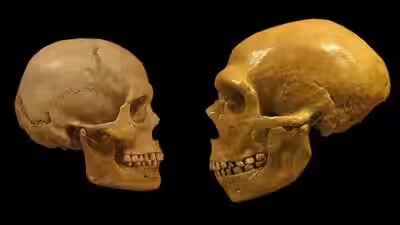
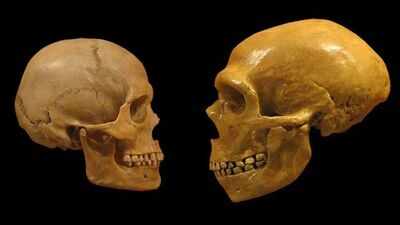
An important distinction in the research is that the lower schizophrenia risk was associated with one particular inherited genetic segment, rather than Neandertal ancestry as a whole.The researchers compared Neandertal-derived genetic variants across the genome with other variants that matched Neandertal genetic patterns but were not inherited through identifiable Neandertal DNA segments.The analysis found that 54.9% of Neandertal variants within inherited segments were associated with lower schizophrenia risk. The corresponding figure for variants outside those segments was 54.4%. The difference was too small to be statistically meaningful.The researchers also identified an interesting contrast between ancient and modern brain anatomy. Fossil skull evidence has suggested that Neandertals had relatively larger occipital lobes and visual cortices than modern humans. However, the particular Neandertal-derived variant identified in the study is associated with smaller occipital lobe volume in present-day people.